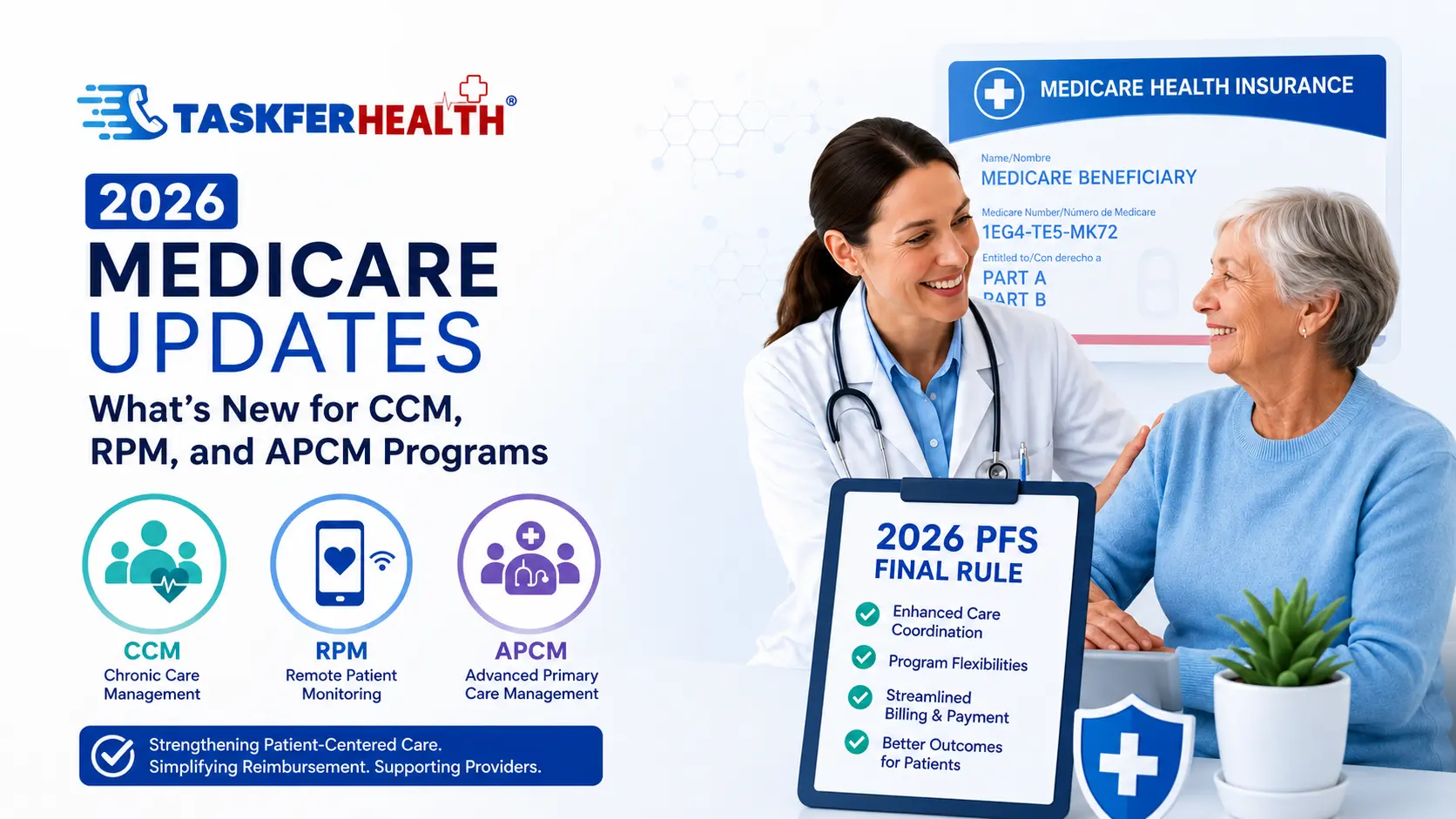
The Centers for Medicare & Medicaid Services (CMS) has released the 2026 Medicare Physician Fee Schedule (PFS) Final Rule, introducing several important changes that impact Chronic Care Management (CCM), Remote Patient Monitoring (RPM), and Advanced Primary Care Management (APCM).
These updates are designed to strengthen patient-centered care, simplify reimbursement processes, and support healthcare providers in delivering continuous, proactive care to patients with chronic and complex conditions.
Increased Medicare Reimbursement Brings New Opportunities
One of the most notable developments in the 2026 Final Rule is the increase in Medicare reimbursement rates. CMS has approved a 2.5% payment increase, marking the first upward adjustment in five years.
Although the increase may amount to only a few additional dollars per patient interaction, it can have a substantial impact for organizations managing large patient populations. The enhanced reimbursement structure improves the financial sustainability of remote care programs and encourages broader adoption of preventive and longitudinal care initiatives.
Remote Patient Monitoring Receives Significant Enhancements
CMS continues to prioritize RPM as a critical component of value-based care and has introduced several changes to make the program more flexible and accessible.
Expanded Billing Options for Device Data Collection
Previously, RPM providers could only bill CPT 99454 when patients submitted at least 16 days of physiological data within a 30-day period. Beginning in 2026, CMS is introducing a new CPT code that allows billing for patients who provide between 2 and 15 days of device-generated health data.
Under the updated framework:
- New CPT 99445 covers 2–15 days of transmitted patient data.
- CPT 99454 will continue to apply to 16–30 days of monitoring data.
This adjustment broadens eligibility for RPM services and allows providers to engage patients with varying levels of participation while maintaining reimbursement opportunities.
New RPM Management Code for Shorter Interventions
CMS is also introducing CPT 99470, a new care management code that captures the first 10 minutes of RPM clinical management services.
The addition recognizes that many patient interactions are brief but clinically meaningful. Providers can now receive reimbursement for shorter monitoring and follow-up activities, encouraging more frequent patient engagement and timely interventions.
Chronic Care Management Guidance Becomes Clearer
While CMS has not made major structural changes to CCM, the agency has provided additional clarification regarding supervision requirements, documentation standards, and time-based billing expectations.
The updated guidance promotes consistency across care teams and healthcare settings while reinforcing the importance of coordinated, ongoing communication in delivering high-quality chronic care management services.
These refinements are expected to help providers maintain compliance and improve the overall delivery of longitudinal patient care.
Continued Growth of Advanced Primary Care Management (APCM)
CMS is further investing in the Advanced Primary Care Management model by finalizing three new APCM add-on codes.
The new codes support:
- Enhanced care coordination
- Behavioral health integration
- Comprehensive primary care services
By expanding APCM, CMS is encouraging practices to adopt a more holistic approach to patient care that extends beyond traditional CCM services. The framework provides a scalable reimbursement pathway for organizations seeking to deliver whole-person, preventive care.
For more details on upcoming models, visit the CMS ASM Overview.
What These Changes Mean for Healthcare Organizations
The 2026 Medicare Physician Fee Schedule reflects CMS’s ongoing commitment to supporting care management programs that improve outcomes and reduce avoidable healthcare utilization.
The updated reimbursement structure, expanded RPM billing options, and growing APCM framework make remote care programs more practical, scalable, and financially sustainable.
For organizations already operating CCM and RPM programs, the transition should be relatively straightforward. For those considering launching or expanding remote care services, 2026 presents a strong opportunity to take advantage of clearer guidelines, increased reimbursement, and broader patient engagement options.
Explore further insights at Taskfer Blog: CCM and Heart Failure.
As healthcare continues to move toward value-based and preventive care models, these updates position CCM, RPM, and APCM as essential tools for improving patient health while supporting long-term practice growth.